
LED lighting offers a wide range of choices, which is useful until several products begin to look almost identical. Two fixtures may have similar shapes and wattages yet produce noticeably different lighting once installed.
Avoiding a few common LED light selection mistakes can prevent disappointing brightness, uncomfortable glare, inconsistent colour, and unnecessary replacement costs.
Mistake 1: Selecting Only by Wattage
Wattage tells you how much electrical power a light consumes. It does not directly tell you how bright the fixture will appear.
Lumens are the more useful measurement for light output.
Instead of asking only, How many watts is this light?, compare its lumen output with the amount of illumination required for the space.
Mistake 2: Using One Colour Temperature Everywhere
Bedrooms, kitchens, retail counters, offices, restaurants, and parking areas serve very different purposes.
Installing the same colour temperature throughout every environment can produce an unsuitable atmosphere.
Warmer light may support relaxation and hospitality, while neutral or cooler light may be more appropriate for particular functional environments.
Consistency within connected spaces is also important.
Mistake 3: Ignoring CRI
Colour Rendering Index affects how naturally colours appear under artificial lighting.
For applications involving fashion, food, interiors, cosmetics, artwork, furniture, and merchandise, colour quality can significantly influence visual perception.
A beautiful interior finish can lose some of its intended impact when illuminated by poor-quality light.
Mistake 4: Overlooking Beam Angle
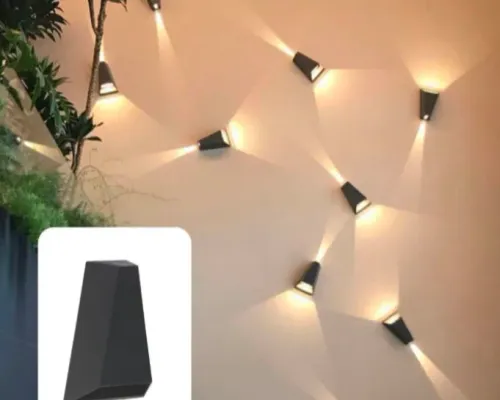
A narrow-beam spotlight and a wide-beam downlight can behave very differently even when their wattage is similar.
Narrow beams are useful for emphasis and accent lighting. Wider beams generally cover broader areas.
Using a narrow beam where general illumination is required may create bright patches and dark gaps.
Mistake 5: Installing Too Many Fixtures
More lights do not necessarily create better lighting.
Excessive illumination can cause glare, increase energy consumption, and make an interior uncomfortable.
Good lighting design considers spacing, ceiling height, surface reflectance, beam distribution, and the intended activity before deciding fixture quantities.
Mistake 6: Forgetting About Glare
Glare becomes particularly problematic in offices, homes with televisions, retail environments with reflective displays, and spaces with polished surfaces.
Fixture position matters just as much as fixture selection.
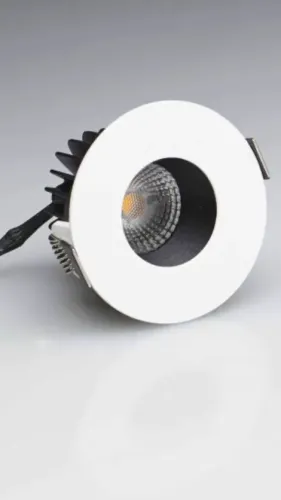
Recessed or shielded sources and thoughtful beam direction can improve visual comfort considerably.
Mistake 7: Choosing Indoor Products for Outdoor Areas
Outdoor LED lighting needs to be selected for its environment.
Entrances, gardens, façades, balconies, pathways, and parking areas may be exposed to dust, moisture, and weather.
Appropriate ingress protection and construction should therefore be checked rather than assuming any LED fixture can be installed outdoors.
Mistake 8: Ignoring Driver Quality
The LED source is only one part of a lighting product.
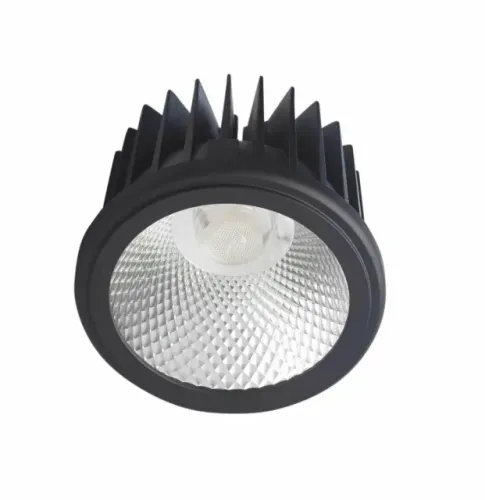
Drivers and thermal management also influence performance and reliability. This is particularly important in commercial spaces where lights may operate for long periods.
Mistake 9: Mixing Unmatched Products
Buying fixtures from different batches or specifications without checking their characteristics can result in visible differences in colour or brightness.
This can be particularly noticeable when several downlights are installed in one ceiling.
Mistake 10: Buying Before Finalising the Layout
Lighting should coordinate with furniture, ceiling design, air-conditioning vents, sprinklers, wardrobes, counters, displays, and electrical points.
Purchasing fixtures before the layout is sufficiently developed can lead to compromises later.
For projects in Hyderabad and elsewhere in Telangana, working with an LED manufacturer and architectural lighting provider such as The LightHouse can help align product selection with actual application requirements.
The safest approach is to evaluate LED lights by performance, placement, compatibility, construction, and purpose—not appearance or price alone.