A continuous LED line can clarify a workstation, guide movement through a lobby, or make merchandise visible, but the wrong profile can create glare, heat, dark joints and difficult maintenance. By the end, you will be able to match each commercial space with an application, mounting method, light distribution and specification that suits its ceiling, services and operating conditions.
Key takeaways
- Match light distribution to each commercial activity and viewing angle.
- Choose recessed, surface-mounted or suspended profiles before finalising the LED system.
- Control office glare by coordinating lines with screens, desks and ceiling services.
- Specify heat management, controls and access panels before installation begins.
Match the lighting line to the commercial space
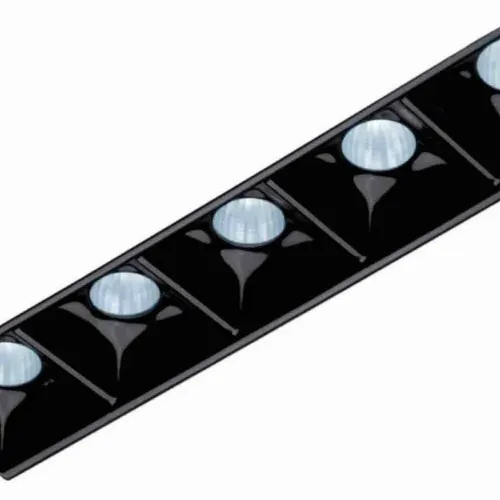
Linear profile applications add useful light where a commercial space needs an even line rather than a series of isolated fittings. Match the line to the activity, ceiling, viewing angle and maintenance access.
| Space | Useful application | Practical fit |
|---|---|---|
| Open-plan office | Suspended ambient and task lighting | Continuous lines over workstation zones; use controlled optics to limit screen reflections |
| Meeting room | Recessed or suspended general lighting | Keep bright lines out of camera views and direct sightlines |
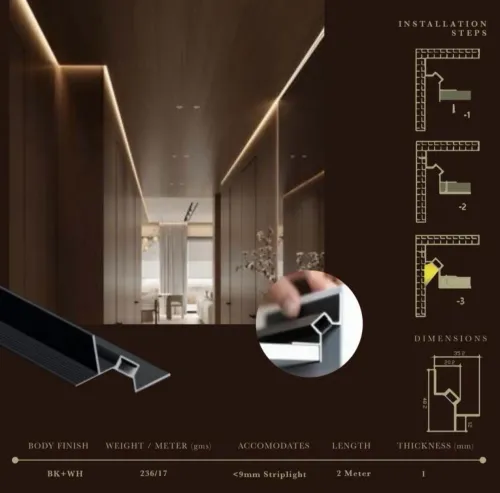
| Reception or lobby | Recessed feature lines and wall washing | Define the desk, entrance and circulation path without making the ceiling visually crowded |
| Retail store or showroom | Shelf, counter and display illumination | Specify colour quality separately; R9 or TM-30 matters for apparel, food, cosmetics and finishes |
| Restaurant, hotel corridor or guest area | Cove, indirect or wall-mounted lighting | Create a softer atmosphere, reinforce wayfinding and highlight vertical surfaces |
In Hyderabad offices, inspect the task plane and normal monitor viewing angles before approving a continuous bright line. Recessed optics, microprismatic lenses, controlled diffusion and sensible spacing reduce veiling reflections; a low-glare target such as UGR 19 suits many screen-based work areas.
Freeze the layout on the reflected ceiling plan before installation. Coordinate each line with ceiling services, access panels and partition heads, then place breaks at ceiling modules or architectural grid lines instead of forcing a line through an obstruction.
Continuous commercial LED lighting is not emergency lighting. Emergency operation needs its own compliant supply, transfer behaviour, battery autonomy and exit-route coverage.
Choose the mounting method before the LED system
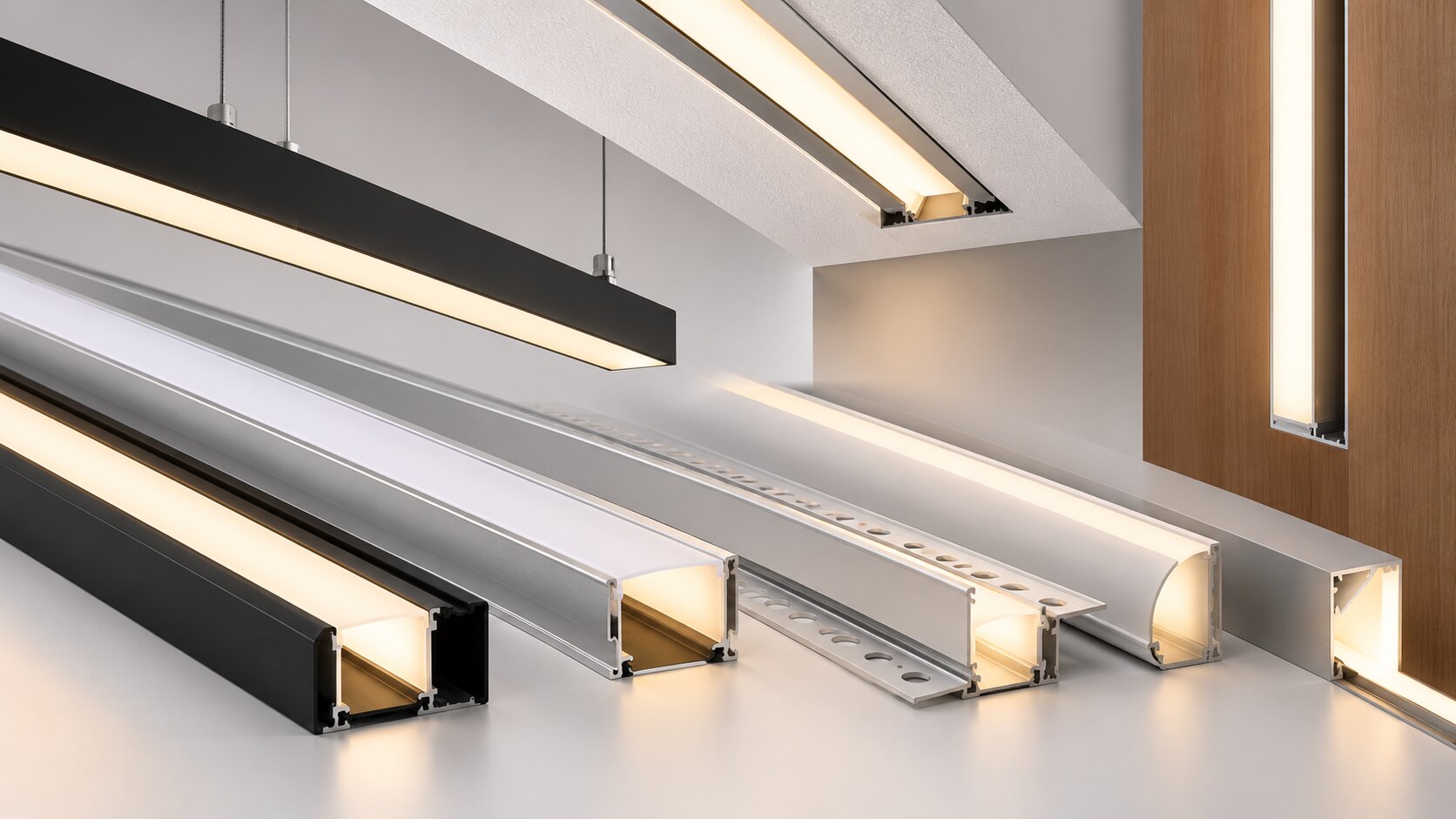
Choose the mounting condition before choosing the LED strip, diffuser or driver. The ceiling, wall, slab depth and service-access route determine whether the profile will be practical after installation.
| Mounting method | Best fit | Check before approval |
|---|---|---|
| Recessed | Gypsum-board slots and flush architectural lines | Ceiling depth, trim detail, shadow gaps and driver access |
| Suspended | Open offices and high ceilings needing continuous ambient light | Suspension points, HVAC coordination, glare control and floor-to-ceiling height |
| Surface-mounted | Retrofit work or exposed soffits | Substrate strength, visible brackets, conduit routes and end-cap finish |
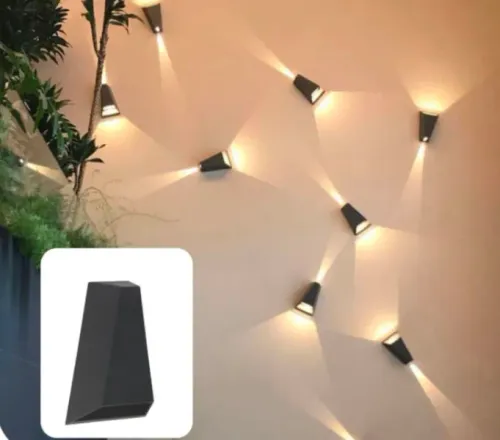
| Wall-mounted | Vertical illumination, corridors, reception walls and wayfinding | Wall structure, viewing angle, asymmetric optics and cleaning access |
Every option needs compatible brackets, end caps, connectors and a replacement route. A low-cost profile becomes expensive when its driver sits above a sealed ceiling or its LED board cannot be replaced.
Treat stretch ceilings as a coordinated assembly, not a standard recessed detail. Resolve the aluminium profile, membrane, carrier frame, heat dissipation, diffuser visibility, shadow gap, driver access and membrane fire limitations with the ceiling installer before site work.
Commercial linear LED lights are the wrong choice when you need tightly focused high-intensity illumination, frequent layout changes, or a compact fitting with no continuous run. They are also not emergency lighting: emergency operation requires compliant supply, transfer behaviour, battery autonomy and exit-route coverage. A normal lighting driver cannot replace that system.
Design office lines around glare, screens and services
At desks, comfortable LED profile lighting for offices keeps the task plane bright without placing a high-luminance line in the monitor’s reflection path. Specify UGR below 19 at workstations, then check the result from seated eye level rather than judging the fitting from the floor.
Use recessed profiles with microprismatic or controlled-diffusion lenses where screens face the ceiling. A bare, continuous diffuser can produce reflected images and veiling reflections across monitors, even when the measured desk illuminance looks adequate. Set spacing from the mounting height, beam distribution and desk layout; do not assume that closer lines provide better uniformity.
In meeting rooms, separate the table-lighting scene from presentation and video-call scenes. Dimming prevents faces from falling into shadow while a bright ceiling line competes with a display. Vacancy control suits rooms that sit empty between bookings, while daylight-linked dimming belongs near glazed façades.
Across open-plan floors, divide perimeter and core zones instead of putting every fitting on one switched circuit. This preserves daylight savings and lets occupants reduce output when the floor is partly occupied. Coordinate each line on the reflected ceiling plan before installation:
- Stop or offset lines around diffusers, sprinklers, smoke detectors and access panels.
- Align unavoidable breaks with ceiling modules or partition heads.
- Keep lines out of direct screen-reflection angles.
- Specify 3,500–4,000 K and CRI 80 minimum for ordinary office work; use CRI 90 where colour-critical tasks matter.
Use retail lines for visibility, hierarchy and movement
Aisles need even, low-glare light for safe movement; shelves need vertical light that reaches products; displays need stronger, controlled emphasis; counters need clear facial and transaction visibility. Do not apply one sales-floor lux target uniformly: customers read merchandise on vertical and angled surfaces, not only the floor.
- Aisles: run lines parallel to circulation paths or between shelving rows, keeping light on the walking surface and away from shoppers’ direct view.
- Shelves: place a narrow profile at the front edge or under each shelf so the shelf above does not shadow labels and products.
- Displays: use adjustable optics or a separate shorter line to create hierarchy without giving every product equal brightness.
- Counters: use continuous, diffused light over the work surface, with glare controlled at standing customers’ viewing angles.
- Entrances and turns: use feature lines to guide customers, but stop them competing with signs or price communication.
Specify colour quality separately from illuminance. Apparel, food, cosmetics and premium finishes need a stated R9 value or TM-30 result, not CRI alone; specify MacAdam-step consistency so adjacent profiles do not show different whites. Freeze the reflected ceiling plan around diffusers, sprinklers, smoke detectors and access panels.
Break long lines at ceiling grids or service zones instead of forcing them through obstructions.
Specify Hyderabad projects for heat, controls and future access
For linear profile lighting for commercial projects in Hyderabad, reliability depends on heat removal, control compatibility and access to every serviceable part. Confirm the ceiling type, mounting substrate, slab depth, HVAC routes and driver locations before approving shop drawings; a concealed driver above an inaccessible gypsum ceiling becomes a maintenance problem.
Ask procurement documents to state:
- LED module, aluminium profile, diffuser, driver and connectors: identify which parts are replaceable.
- Driver protocol: confirm DALI, 0–10 V, phase dimming or switched operation matches the building-management and lighting-control system.
- Driver location and access route: show removable panels, ceiling access tiles or a serviceable suspension detail.
- Warranty: specify colour-maintenance limits, not only whether the lamp still produces light.
- Spares: require drivers, diffusers, connectors and matching LED modules to remain available.
- Long runs: require colour consistency by MacAdam-step tolerance and batch identification.
Heat must have a physical path into aluminium and away from the LED board. For stretch ceilings, coordinate the profile, membrane, carrier, shadow gap, diffuser, tensioning and driver access with the ceiling installer; confirm the membrane’s fire and material limits before installation. A standard recessed profile is not automatically suitable.
The LightHouse can help resolve customised lengths against site dimensions, but the approved schedule must still record controls, emergency-lighting separation, replacement access and commissioning tests. Normal drivers do not replace a compliant emergency supply, battery autonomy or exit-route coverage.
Related items
 | LED Linear Profile Lighting | Recessed Linear | Suspended Linear | Surface Mounted Linear | Wall Mounted Linear Linear Aluminium Profile Lighting ₹250 The Light House offers premium Linear Aluminium Profile Lighting solutions designed for modern residential, commercial, retail, hospitality, office,... View product → |
LINEAR PROFILE ₹750 We manufacture led linear Profile in customised sizes as per site requirement. View service → |
Frequently asked questions
How do you match linear profile applications to a commercial space?
Choose the line’s distribution, position and brightness according to the activity, ceiling form, viewing angle and maintenance access.
Which mounting method suits commercial linear LED lights?
Select recessed, surface-mounted or suspended installation before choosing the LED system, because each method changes the ceiling detail and service access.
How should LED profile lighting for offices address glare?
Coordinate light lines with screens, desks and ceiling services, then use suitable optics and positioning to reduce reflected and direct glare.
What should you specify for linear lighting for retail in Hyderabad?
Use lighting lines to support product visibility, visual hierarchy and customer movement while planning for heat, controls and future access.
Related products
 | ₹1200 LED linear profile available in different measurements View product → |
 | Spot Lights for Residence, ₹850 The Light House LED Spot Light is designed to provide bright, focused, and energy-efficient lighting for residential, commercial, retail,... View product → |
 | LED Track Light | LED Wall Washer | Architectural LED Lighting | Commercial Lighting ₹1200 The Light House offers premium LED Track Lights and LED Wall Washers designed to provide high-performance, energy-efficient lighting for retail... View product → |
 | Spot Lights | LED Spotlights | LED Wall Washer | Architectural & Commercial LED Lighting LED Spotlights & LED Wall Washer ₹450 The Light House offers premium LED Spotlights and LED Wall Washers designed to deliver high-performance, energy-efficient illumination for... View product → |
Keywords