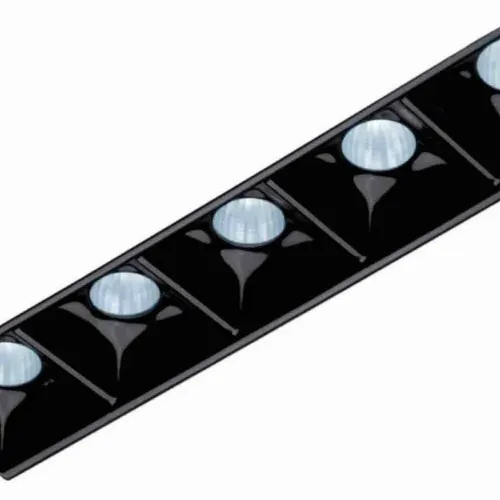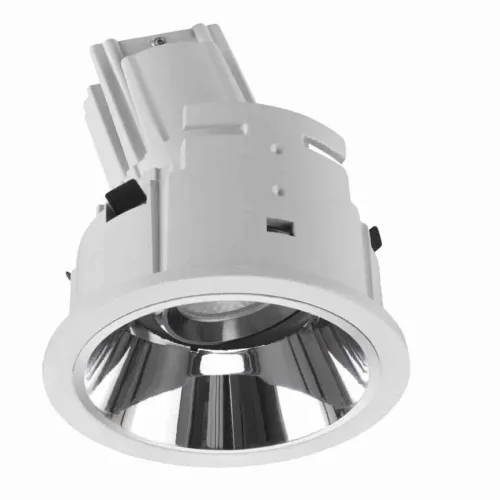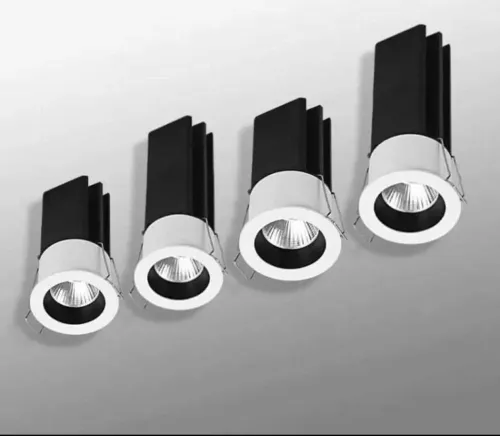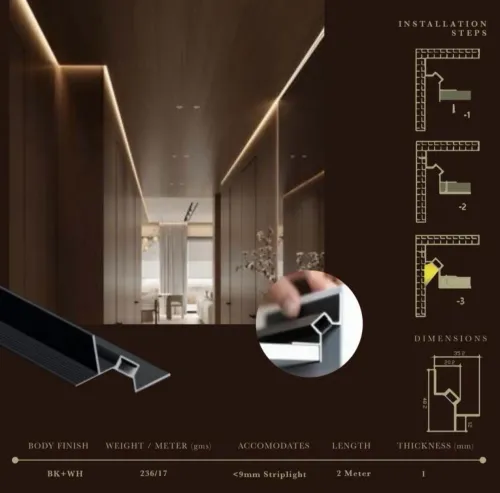
A façade can look uneven, harsh or visually weak when the fixture is chosen by wattage alone. By the end, you will be able to match each architectural feature with the right optic, colour specification, mounting geometry, outdoor protection and commissioning checks before procurement.
Key takeaways
- Match spotlights to texture and wall washers to uniform facade coverage.
- Specify delivered lumens, beam angle, colour temperature and glare control.
- Calculate setback and fixture spacing from the target wall before ordering.
- Approve the driver, sample and night-time aiming on site.
Match the Fixture to the Architectural Feature
Choose the fixture by the feature’s visual job: texture, uniformity, hierarchy or accent. A wattage alone cannot predict the result; specify delivered lumens, beam distribution, aiming range, optical cut-off, glare control and mounting method.
| Feature | Preferred fixture | Specification focus |
|---|---|---|
| Façade | Wall washer or linear profile | Uniform vertical coverage; check reveals, slabs and reflectance |
| Entrance | Adjustable spotlight or wall washer | Controlled beam, cut-off and low glare near visitors |
| Column | Narrow-beam spotlight | 10–15° optic for tall, isolated vertical emphasis |
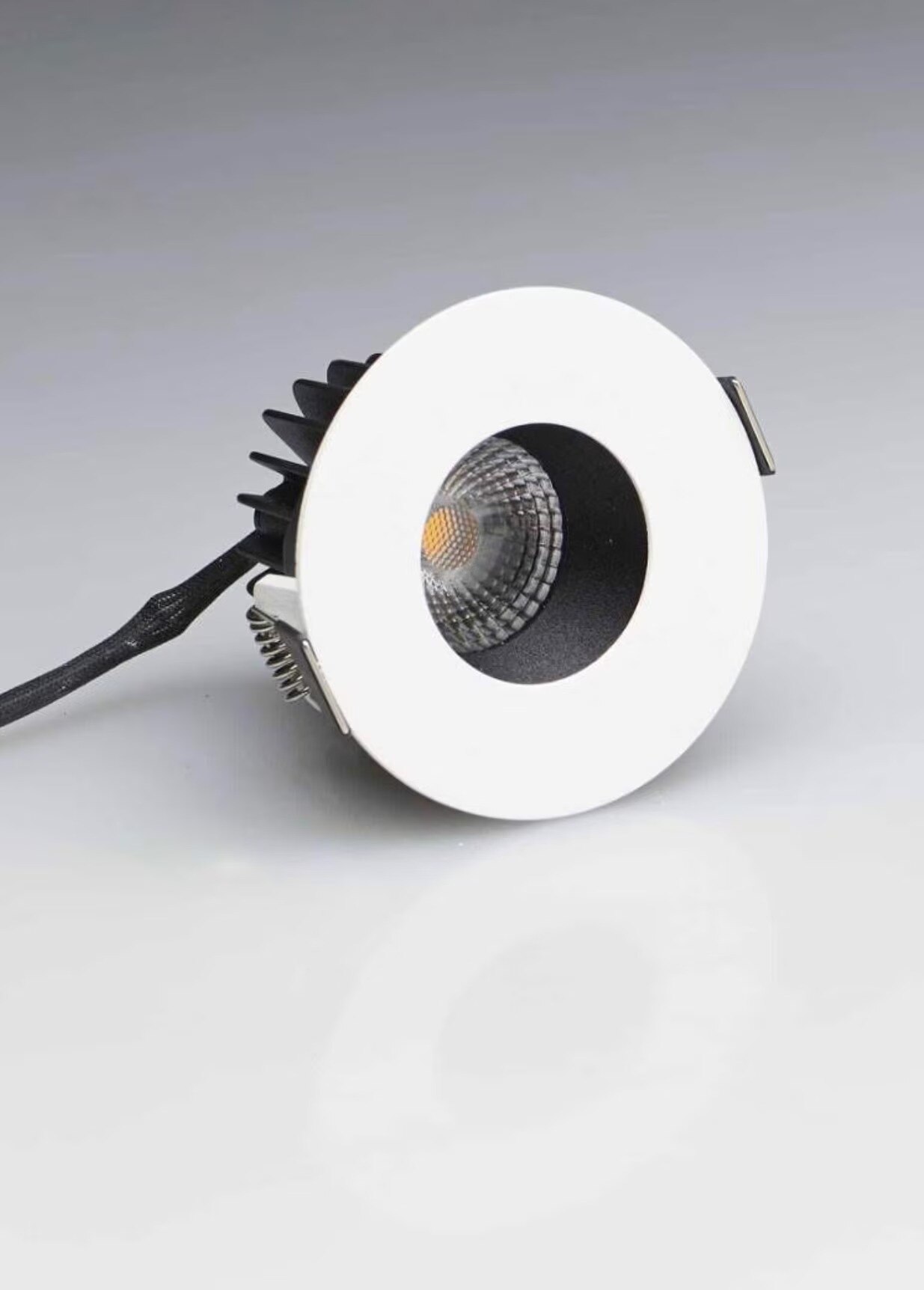
| Artwork | Adjustable architectural LED spotlight | Accurate colour rendering, tight beam and precise aiming |
| Landscape feature | Outdoor spotlight | In-ground, spike or surface mount matched to exposure and drainage |
| Retail display | Track spotlight | Replaceable optics, glare control and consistent colour bin |
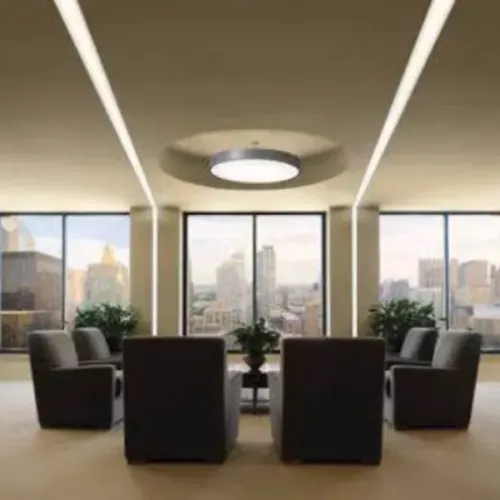
| Interior wall | Wall washer or grazing fixture | Wider distribution for evenness; grazing only for deliberate texture |
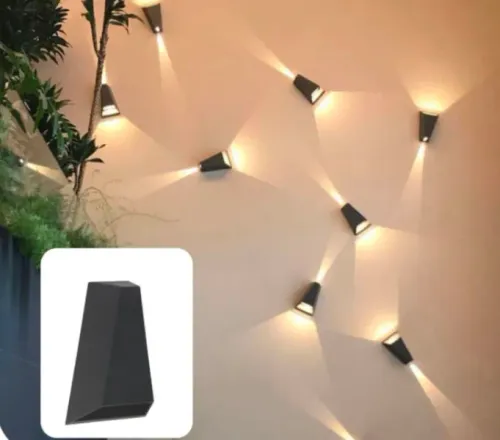
Use close grazing to reveal masonry texture, but expect defects to become more visible. Moderate-distance washing creates a flatter façade; narrow-beam highlighting gives columns and focal objects priority.
For broad walls, assess vertical illuminance and luminance uniformity across the complete surface, not just horizontal lux at ground level. Confirm the actual stone, plaster, glass or metal before ordering.
For LED spotlights and wall washers for architectural projects in Hyderabad, specify the exposure zone, not merely “outdoor”: IP65 resists dust and water jets but does not prove corrosion, UV or impact resistance. Order architectural LED spotlights and washers to a defined CCT and MacAdam step tolerance so one façade does not show mismatched colour.
Choose Beam Angle, Wattage and Colour for the Target
Choose delivered lumens from the target’s size, reflectance and viewing distance, not from wattage alone. A 20 W fixture with an efficient optic can outperform a 30 W unit.
Check the luminaire’s operating ambient range and thermal derating curve; a fixture rated only to Ta 35°C can lose output beneath dark façades or poorly ventilated canopies in Hyderabad.
| Target | Beam angle and output | Colour specification |
|---|---|---|
| Columns, statues, distant focal points | 10–15°; concentrated delivered lumens | 2700–3000 K, CRI ≥90, R9 ≥50 |
| Façades and interior walls | 24–40° or wall-wash optic; prioritise uniform lumens | 3000–3500 K, CRI ≥90 |
| Retail displays and artwork | Adjustable 15–30°; enough output without glare | 3000–4000 K, CRI ≥90, R9 ≥80 |
| Landscape, stone and heritage surfaces | 15–30°; test reflected brightness on site | 2700–3000 K, CRI ≥90 |
Treat CRI as a starting point, not proof of convincing colour. For commercial accent lighting, request measured Ra, R9 and TM-30 Rf/Rg data; saturated reds, greens and deep blues can reveal weaknesses hidden by Ra alone. Specify one CCT and a colour-consistency limit, such as a three-step MacAdam ellipse, across every fitting on the elevation.
Before ordering lighting for architectural projects, ask for:
- Delivered-lumen data, optic, shielding and driver derating information.
- A sample tested on the actual stone, plaster, glass, metal or textured wall.
- Night-time aiming, representative illuminance readings, scene checks and inspection for road or occupied-building glare.
Honeycomb louvres, snoots or shields often solve glare better than reducing wattage. Treat the approved sample as the photometric and visual benchmark; a similar-looking replacement with another optic can change the façade result.
Calculate Setback and Spacing Before You Order
Start with the wall height and intended visual effect, not fixture wattage. Grazing brings out stone texture but exposes defects; moderate-distance washing looks flatter. The same LED wall washer applications will not suit both.
1. Obtain the supplier’s IES or LDT file and confirm delivered lumens, not nominal LED lumens. Model the actual mounting height, wall setback, projecting slabs, windows, columns and surface reflectance. Check vertical illuminance and luminance uniformity across the wall, rather than judging success from horizontal lux at ground level.
2. Estimate the beam footprint at the wall with this formula: width = 2 × setback × tangent of half the beam angle. A 30° optic at a 2 m setback produces an approximate 1.07 m geometric footprint before real photometric losses and cutoff. Use the file’s beam data for the final figure.
3. Set initial fixture spacing below the footprint width, leaving roughly 20–40% overlap for a smoother wash. Increase spacing only after a night mock-up proves there are no dark strips. Excessive overlap wastes fittings and creates bright bands.
4. Aim each unit toward the wall’s visual centre, then adjust tilt to cover the upper and lower edges without sending glare into viewers. A narrow 10–15° beam suits columns or distant focal points; 24–40° beams usually cover shorter setbacks more evenly.
5. Test one or two fixtures on the actual façade. Move them farther away if scallops or hot spots appear near the source; move them closer or reduce spacing when the far wall goes dark. Recheck textured stone, reveals and signage before ordering.
Specify Outdoor Protection for Hyderabad Site Conditions
An “outdoor” label is not a site specification. For lighting for architectural projects in Hyderabad, specify the exposure zone and check these points before approval:
- IP rating: IP65 excludes dust and water jets, but it does not prove impact resistance, UV durability, corrosion resistance or immersion protection. Use a higher rating only when the installation requires it.
- Operating temperature: Request the complete Ta range. A fixture rated to Ta 35°C can derate beneath a dark façade, canopy or poorly ventilated ceiling void.
- Thermal performance: Obtain the lumen-maintenance and thermal-derating curve, plus the required clearance around the housing and driver.
- Corrosion and UV: Confirm coating and material resistance for pollution, chemicals and intense sunlight. Use corrosion-resistant housings and stainless-steel hardware in exposed or chemically aggressive locations.
- Rain drainage: Provide a downward-facing cable entry, drip loop and clear drain path. Do not create pockets that hold water around glands or connectors.
- Surge protection: Check protection at the distribution board and driver. Ask for test basis, surge-current rating, common-mode and differential-mode protection, and whether the device is replaceable after an event.
- Cable routing: Specify UV-resistant outdoor cable, sealed glands, correct bend radius and accessible junction boxes.
- Maintenance: Leave room to remove the driver, clean the lens and re-aim the fixture without dismantling façade panels or using unsafe access equipment.
Poor drainage, heat or inaccessible drivers can turn a reliable luminaire into a recurring maintenance failure.
Approve the Sample, Driver and Night-Time Installation
Do not approve a fixture from a catalogue photograph. Compare the supplier submittal with the approved sample: optic, beam angle, delivered lumens, CCT, CRI, R9, MacAdam step, IP rating, mounting detail and photometric file must match. A similar-looking replacement with a different optic can change the façade result completely.
Test one sample at night on the actual stone, plaster, glass, metal or textured façade. Judge the intended effect—texture, uniformity, hierarchy or drama—at the proposed setback, because close grazing exposes defects while moderate-distance washing appears flatter. Record photographs from pedestrian and road viewpoints.
| Check | Accept | Reject |
|---|---|---|
| Fixture | Matches approved optic, CCT and colour-consistency tolerance | Different optic, LED bin or visible colour |
| Driver | Listed output, dimming protocol, voltage range and accessible location | Unnamed driver, flicker, incompatible DALI, DMX or 0–10 V control |
| Control scene | Fixtures respond together without delay or colour shift | Zones drift, reset or change brightness unpredictably |
| Mock-up | Even result on the real finish at the specified aiming angle | Hot spots, scallops, spill light or reflected glare |
Ask The LightHouse to submit the driver data and control wiring before installation, not after faults appear. Commission architectural LED spotlights and LED wall washer applications at night:
- Aim each fitting from occupied viewpoints, then lock the bracket.
- Measure illuminance at representative façade and pathway points.
- Verify every scene, dimming level and timer.
- Inspect windows, adjacent roads and buildings for disability glare.
- Match colour across batches; high CRI alone cannot prevent mismatched reds, blues or greens in commercial accent lighting.
Related products
 | Spot Lights | LED Spotlights | LED Wall Washer | Architectural & Commercial LED Lighting LED Spotlights & LED Wall Washer ₹450 The Light House offers premium LED Spotlights and LED Wall Washers designed to deliver high-performance, energy-efficient illumination for... View product → |
 | Spot Lights for Residence, ₹850 The Light House LED Spot Light is designed to provide bright, focused, and energy-efficient lighting for residential, commercial, retail,... View product → |
Frequently asked questions
How do you match an LED fixture to an architectural feature?
Use spotlights for texture, hierarchy and accents; use wall washers for broad, even facade illumination.
What should you specify besides LED wattage?
Specify delivered lumens, beam angle, colour temperature, aiming range, optical cut-off and glare control.
How do you calculate spotlight setback and spacing?
Measure the target height and width, then test beam spread, setback and overlapping coverage before ordering quantities.
What outdoor protection is suitable for Hyderabad projects?
Specify an enclosure rating such as IP65 or higher for exposed fixtures, and confirm corrosion resistance, drainage and cable entries.
Why approve a sample and night-time installation?
A night test reveals glare, beam overlap, colour consistency, aiming errors and driver performance before full installation.
Related products
 | LED Track Light | LED Wall Washer | Architectural LED Lighting | Commercial Lighting ₹1200 The Light House offers premium LED Track Lights and LED Wall Washers designed to provide high-performance, energy-efficient lighting for retail... View product → |
 | ₹2400 Wallwasher fixtures, spotlights View product → |
 | ₹4500 LED ceiling recessed 360degree beam angel spotlights View product → |
Keywords